

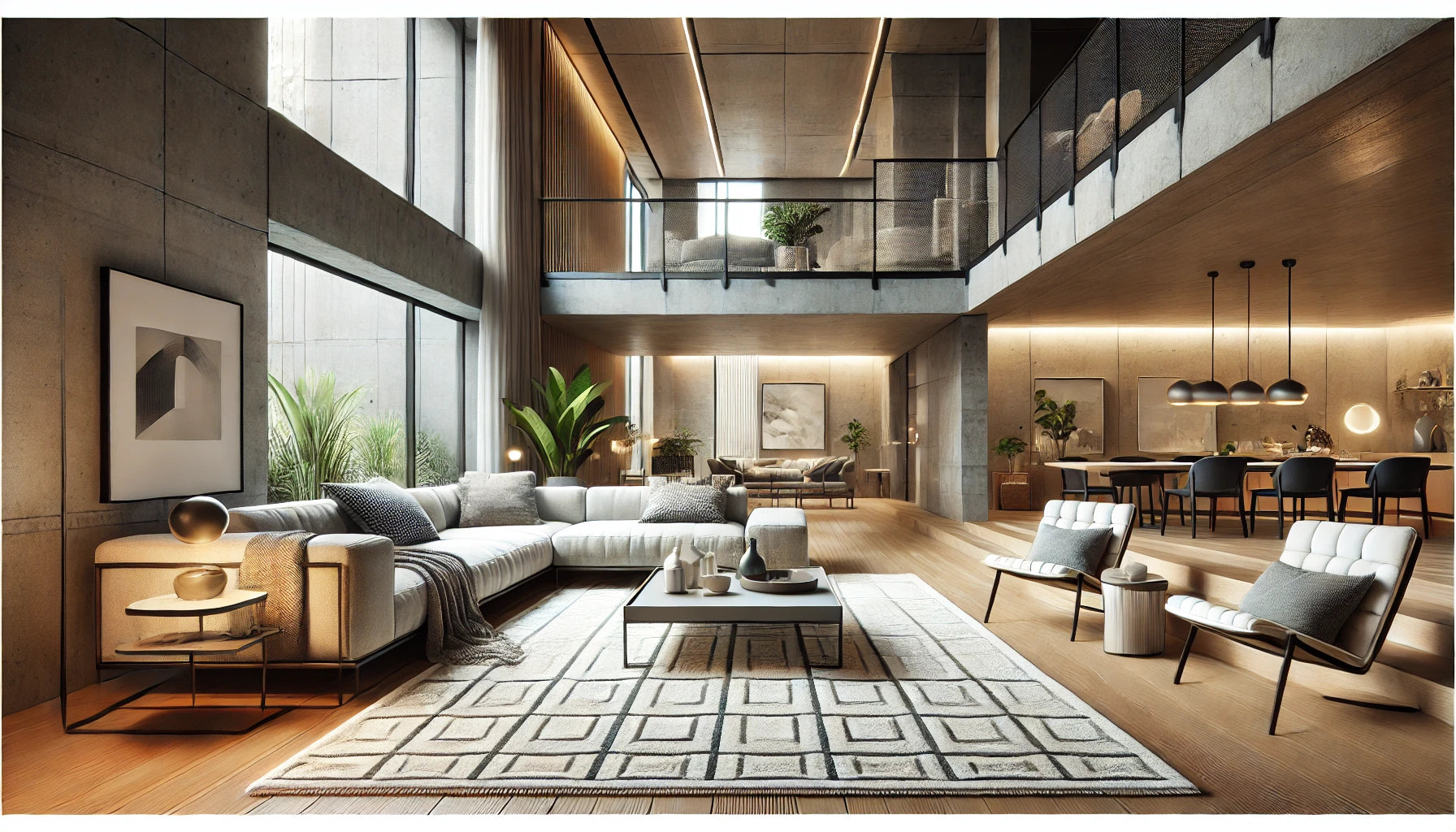
Updated April 2026 with current trends, updated room-sizing charts, and curated picks from our 999-rug collection.
The 8×10 area rug is the most popular rug size in America, and for good reason. It works in more rooms than any other single size — large enough to anchor a standard living room seating group, small enough to fit a master bedroom without overwhelming it, and proportioned well for dining rooms under a six-seat table. If you can only own one rug, the 8×10 is almost always the right call.
Here’s the thirty-second version: an 8×10 rug fits most living rooms with the front-legs-on approach and most bedrooms with at least 18 inches of rug exposed on each side of the bed. Wool is the right material for high-traffic rooms; viscose or hand-tufted for lower-traffic and formal spaces. When in doubt, go up to a 9×12 — the room will look bigger, not smaller, with a larger rug.
2026 8x10 Area Rug Trends
The 8×10 rug market in 2026 reflects broader shifts in how Americans want their homes to feel.
One large statement piece
Layering small accent rugs is fading. The 2026 direction is one well-chosen rug, sized correctly, doing all the work. The 8×10 is benefiting from this trend because it is precisely the size that “fills the room” in most American living rooms. We are selling fewer 5×8 rugs and more 8×10 and 9×12 rugs than at any point in the last five years.
Warm neutrals over cool grays
The all-gray interior peaked around 2018. Buyers in 2026 are choosing ivory, camel, warm beige, oat, and soft brown — tones that make a room feel lived-in and welcoming rather than staged. An 8×10 in warm ivory wool under a neutral sofa is one of the most versatile, timeless choices you can make.
Saturated jewel tones as anchors
On the opposite end of the spectrum, buyers with neutral walls and light furniture are reaching for deep blues, emeralds, and oxblood reds. In an 8×10, a saturated rug becomes the visual anchor for the whole room. This works best when everything else in the space stays quiet.
Construction quality is more visible
Hand-knotted and hand-tufted rugs are outselling machine-made at a faster rate than previous years. Buyers are asking how rugs are made, researching knot density, and making more deliberate choices. The “just a floor covering” mentality is giving way to treating an 8×10 rug as a considered, long-term purchase.
Is an 8x10 the Right Size for Your Room?
This is the most important question to answer before you buy — and the most common source of buyer regret when it’s answered wrong.
The golden rule: bigger is almost always better
The number one rug mistake we see, in thirty-plus years of selling rugs, is a rug that is too small for the room. A 5×8 rug sitting in the center of a 14×17 foot living room with the sofa and chairs all floating around it — not touching the rug — makes the room feel smaller, not cozier. The furniture looks unmoored. The rug looks accidental. If you’re torn between an 8×10 and a 9×12, take the 9×12.
Room dimension guide
Here is how to decide whether an 8×10 works in your specific room:
- Living room under 12×15 ft: 8×10 works well, usually with the front-legs-on layout
- Living room 12×15 to 14×17 ft: 8×10 at the minimum; 9×12 is better if budget allows
- Living room over 14×18 ft: 8×10 will float — go to 9×12 or 10×14
- Master bedroom (queen bed): 8×10 works perfectly, positioned with the bottom two-thirds under the bed
- Master bedroom (king bed): 8×10 is tight; you may want 9×12 or two runners on each side
- Dining room (6-seat table): 8×10 works if the table is no wider than 42 inches — all chair legs should stay on the rug when pulled out
- Home office or study: 8×10 is usually generous — 6×9 or 5×8 may be more appropriate
For more sizing guidance across every room type, our complete living room rug guide has detailed layouts for different furniture arrangements.
Furniture Layout: How to Position an 8x10 Rug
Once you have the right size rug, placement determines whether it looks intentional or accidental.
Front-legs-on layout
The most common and forgiving approach for living rooms. The front two legs of the sofa, loveseat, and armchairs all sit on the rug. The back legs are on the floor. The rug should extend at least a few inches past the sides of the sofa so the seating group feels enclosed. This works well with an 8×10 in a living room with a sofa under 90 inches wide.
All-legs-on layout
All four legs of every piece of furniture sit on the rug. This requires the rug to be large enough to extend 12 to 18 inches past the furniture on all sides. An 8×10 can pull this off in a smaller living room with a loveseat and two chairs rather than a full sofa arrangement. In a larger room, you need a 9×12 or 10×14 for this approach.
Floating layout (coffee table only)
The rug sits under the coffee table in front of the seating, without any furniture legs on the rug. This works in very compact spaces or apartment living rooms where a larger rug is impractical. For this layout to look right, the rug should be at least as wide as the sofa — an 8×10 placed horizontally works well here.
Bedroom placement
The standard approach: position the 8×10 so the bottom two-thirds sits under the bed, with the top third of the rug disappearing under the bed frame. The rug extends 18 to 24 inches out from each side of the bed and 18 to 24 inches past the foot of the bed. This is the placement that makes getting out of bed in the morning feel luxurious. See our bedroom rug sizing guide for layouts by bed size.
8x10 Rug Styles
The 8×10 format works across every design aesthetic. Here are the five style families we sell most successfully in this size.
Traditional and Persian-inspired
The classic medallion-and-border designs that have defined American living rooms for a century. In an 8×10, a traditional Persian-inspired rug is substantial enough to carry the visual weight of a full seating arrangement. They work especially well in rooms with warm wood tones, leather furniture, or crown molding — they add a layer of history and formality without being fussy. Our hand-knotted Afghan pieces in this size are some of the best-value traditional rugs available anywhere.
Modern and geometric
Clean geometric patterns, abstract designs, and bold color blocking. An 8×10 modern rug works best as a base layer in rooms where the furniture and architecture do most of the talking. If your living room has a statement sofa, a strong light fixture, or architectural details, a modern rug that stays in its lane is the right call.
Transitional
The sweet spot between traditional motifs and modern scale. Transitional rugs take classical patterns and rework them with softer palettes, larger scale, or simplified borders. In an 8×10, transitional designs work with the widest range of furniture styles — from mid-century modern to coastal to farmhouse. If you’re not sure what style your room is, start with transitional.
Bohemian and tribal
Layered patterns, earthy tones, hand-woven texture, occasional fading or distressing. An 8×10 kilim or Moroccan-style rug in this family adds warmth and eclecticism to spaces that mix vintage and contemporary furniture, plants, and collected objects. These rugs are also among the most practical: a busy pattern hides daily dirt and pet hair better than almost anything else.
Solid and minimalist
A single-color 8×10 — in ivory, soft gray, camel, or deep blue — is a confident design choice that is having a real moment in 2026. It requires the rest of the room to carry the visual interest, but when it works, it works completely. High-quality solid-color rugs are less forgiving of dirt than patterned ones, which is worth knowing before you choose cream for a household with a muddy dog.
8x10 Rug Materials
Wool: the right call for high-traffic spaces
If this rug is going into a living room that gets daily use, wool is the correct answer. Natural durability, lanolin stain resistance, and an ability to age beautifully over decades — no synthetic matches wool’s track record. Expect to pay more upfront; expect to never replace it. Our complete wool rug guide covers every detail on construction types, pile height, and care.
Viscose and bamboo silk: low traffic only
Viscose gives you an extraordinary softness and sheen that wool can’t match. In a formal dining room, a low-traffic bedroom, or a sitting room that rarely sees heavy use, a viscose or bamboo silk 8×10 is genuinely beautiful. In a living room with kids, dogs, or daily use, it will look tired within a few years. Choose viscose for looks; choose wool for durability.
Hand-tufted wool blends: the value choice
A hand-tufted rug using a wool-and-synthetic blend gives you natural fiber quality at a price point that sits between machine-made and pure hand-knotted. For buyers who want the feel and look of wool without the full hand-knotted investment, this is the most practical middle ground.
Polypropylene and synthetic: outdoor or utility use
A fully synthetic 8×10 rug is water-resistant, stain-resistant, and inexpensive. It is the right choice for covered outdoor patios, sunrooms, mudrooms, or any space where you want the look of a rug without the maintenance requirements. It is not the right choice for a living room or bedroom where quality matters — synthetic pile flattens, develops a sheen, and does not age gracefully.
8x10 vs. Other Sizes: Quick Comparison
| Size | Best room fit | Furniture approach | When to use instead |
|---|---|---|---|
| 5×8 | Small bedroom, compact living room | Coffee table only (floating) | If your sofa is under 72 inches |
| 6×9 | Studio apartment, small living room | Front legs on | When 8×10 is too large for the space |
| 8×10 | Most living rooms and bedrooms | Front legs on or all-legs-on | The default recommendation |
| 9×12 | Larger living rooms, formal dining rooms | All-legs-on | When room is 14 ft or wider |
| 10×14 | Large open-plan living rooms, dining rooms | All-legs-on | When sofa is over 96 inches or room over 16 ft |
The most common upgrade path: a buyer orders an 8×10 for a 13×17 living room and discovers it looks small. The right call was a 9×12. Measure twice, and use painter’s tape on the floor to mock up the rug dimensions before buying. For full guidance on the larger sizes, see our 9×12 rug guide.
Caring for an 8x10 Area Rug
A few consistent habits protect your investment across decades.
- Vacuum weekly. For hand-knotted and hand-tufted rugs: suction only, no beater bar. For machine-made and flatweave: standard setting is fine.
- Rotate every six months. Even traffic wear and sun exposure. The end closer to the window will fade faster if you never rotate. Set a calendar reminder.
- Use a rug pad. A rug pad under an 8×10 protects the backing, reduces pile compression from furniture legs, and prevents the slow creep across hardwood floors. Non-slip natural rubber for hard floors; low-profile felt pad over carpet.
- Blot spills immediately. Cold water and a white cloth. Work from the outside in. Do not rub. For wool rugs, the lanolin barrier gives you a reasonable window — but the sooner, the better.
- Professional cleaning every 2–3 years for wool and viscose. A rug specialist who hand-washes, not a carpet-cleaning service.
Frequently Asked Questions
Will an 8x10 area rug fit under a king bed?
Barely. A standard king bed is 76 inches wide; an 8×10 rug is 96 inches wide, leaving about 10 inches of exposed rug on each side. For most people that feels tight — you want 18 to 24 inches on each side to feel intentional. A 9×12 is the better call for a king bed in most bedrooms. Two runners (one on each side of the bed) are also a popular and practical solution.
Can an 8x10 rug work under a dining table?
Yes, if the table is no wider than 42 inches and seats six or fewer people. The key requirement: all chair legs must remain on the rug even when a chair is pulled out for someone to sit. Test this by measuring the chair placement fully extended. If chairs slide off the rug, you need a 9×12.
Should I put an 8x10 rug over carpet?
Yes. Layering an area rug over wall-to-wall carpet is increasingly common, especially in apartments where you can’t change the flooring. Use a low-profile rug pad made specifically for carpet (not the open-weave rubber type, which can bunch). Choose a rug with a dense, flat-lying weave — a very high-pile rug layered over carpet can become unstable and difficult to walk on.
How do I keep an 8x10 rug from sliding?
Rug pad, full stop. A non-slip natural rubber pad cut to the rug dimensions will prevent sliding entirely. The cheap double-sided tape alternatives work initially and fail within months. A quality rug pad is a one-time purchase that lasts the life of the rug.
What is the weight of an 8x10 area rug?
It varies significantly by construction. A hand-knotted wool 8×10 can weigh 30 to 50 pounds. A machine-made synthetic 8×10 might weigh 15 to 25 pounds. A flatweave 8×10 is usually on the lighter end. This matters if you plan to move the rug frequently for cleaning or rearranging.
Is an 8x10 or 9x12 rug better for a living room?
In most American living rooms, the 9×12 is better if the budget allows. The extra foot in each direction means all furniture legs can sit on the rug, the room reads as larger, and the rug doesn’t float in the space. The 8×10 is the better choice when the room is on the smaller side (under 13 feet wide) or the budget doesn’t accommodate the size increase. When in doubt, mock the size up with painter’s tape on the floor before deciding.
Recommended 8x10 Rugs from Our Collection
We carry hundreds of 8×10 rugs in our Deer Park, NY warehouse — hand-knotted, hand-tufted, flatweave, and machine-made — in every style, color, and construction. A few ways to browse:
Browse by size: All 8×10 rugs · 9×12 rugs · Round rugs
Browse by construction: Hand-knotted rugs · Hand-tufted rugs · Wool rugs
Browse by color: Ivory and beige · Blue · Gray · Red and burgundy · Green
Every rug we sell ships free on orders over $99, with a thirty-day return policy. Not sure whether an 8×10 or 9×12 is right for your room? Send us the room dimensions and a photo at info@eorc.us — we’ll give you a straight answer.
The 8x10 is the most popular dining room rug size. Our dining room rug guide covers the 24-inch rule, size-by-table chart, and best stain-resistant materials for the dining room.
Eastern Oriental Rugs is a wholesale and retail rug company based in Deer Park, NY, supplying area rugs to homeowners, interior designers, and major retailers across North America since the 1980s.
Explore more: Contemporary Rugs · Rug Sizes & Dimensions Guide (2026).

